
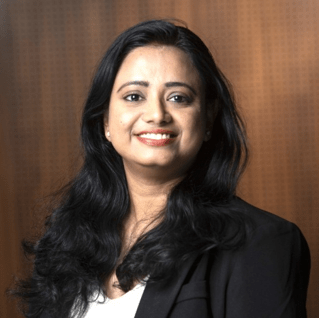
Piyali Bhattacharya is a Teaching and Research Fellow at the School of Psychology, University of Birmingham, and has recently completed her PhD. Her research focuses on clinical and developmental psychology with special interest to mental health and neurodiversity. Alongside her research, Piyali has been involved in designing and leading a postgraduate Digital Mental Health module for a distance-learning MSc programme. Piyali is deeply committed to inclusive education, particularly in relation to supporting diverse and international postgraduate learners. This case study emerged from an application for Advance HE fellowship via our Beacon Scheme. Piyali reflects below on her practice and her journey through teaching, designing the module, and achieving recognition as Fellow of Advance HE.
You can download the case study here.
When I took on the role of module lead for the Digital Mental Health (DMH) module of our distance-learning MSc programme, I knew I was stepping into a beautifully complex space. Our student cohort is a global tapestry: working professionals, mature learners, and international students living across multiple time zones, all bringing vastly different academic cultures and digital confidence levels to the table. Many students balance study with professional roles, and family responsibilities. Traditional, rigid, hour-long lectures simply weren’t going to cut it and would not be enough to support meaningful learning in this context. Instead, the challenge and opportunity was not simply about moving teaching online. It was about designing a learning environment where students from different backgrounds felt included, supported, and able to engage critically with the subject matter.
This case study emerged from that exact pivot point. The module was designed moving away from transmissive, “one-size-fits-all” teaching toward an, inclusive, flexible, and culturally-responsive digital architecture. I wanted to build a virtual space where student diversity wasn’t just a logistical challenge to be managed, but a rich pedagogical asset within the learning process.
Bringing global realities into the classroom – the case study at a glance
This case study highlights how inclusive, student-centred online design can empower diverse learners to bring their own cultural contexts and lived realities into their learning. By intentionally moving beyond a Eurocentric lens, students engage more critically and authentically with the material. The approach fosters deeper engagement, meaningful collaboration, and a shift from passive learning to active knowledge co-creation, even within an asynchronous environment
Want to see how this was achieved? Download the full paper here to explore the full framework, strategies, and outcomes.
The Beacon process: moving from practice to recognition
While the module’s initial run was a success, reflecting on it through the lens of the Beacon Advance HE Fellowship application process was what truly solidified its value for me. Engaging with the Professional Standards Framework provided a structured opportunity to pause, step back and critically examine the ‘why’ behind my pedagogical choices, linking my practice to evidence-informed principles and identifying areas for further development. . Through this, I gained a much clearer articulation of my teaching philosophy and a greater confidence in my identity as an inclusive educator, prompting more intentional reflection on how teaching evolves through feedback, collaboration, and ongoing inquiry. It allowed me to see that the empathetic, scaffolded structures I built weren’t just “good ideas”, they were robust, evidence-grounded frameworks that empower non-traditional learners to thrive.
Beyond personal growth, the Beacon process provided a platform to make these teaching innovations visible. It pushed me to share this work with the wider educational community. and contribute to broader conversations about inclusive online learning in higher education.
This experience ultimately reinforced an important lesson: digital education is most effective when it remains deeply human. Even within online spaces, students want to feel seen, supported, and connected. Designing with empathy, accessibility, and inclusion in mind not only enhances engagement and performance but also strengthens students’ sense of belonging. It also highlights the idea that inclusive education is not a one‑time intervention, but an ongoing, reflective practice.
I hope this case study contributes, in some small way, to ongoing conversations about how we can create more inclusive, thoughtful, and globally responsive approaches to digital education. I hope it offers reassurance that inclusion does not always require large-scale technological innovation. Often, it begins with intentional design choices: creating flexibility, valuing students’ lived experiences, building opportunities for connection, and enabling learners to apply knowledge in meaningful and authentic ways.
More information and download
For more details and to download the article go here.
Previous articles and issues
View all articles and issues of Education in Practice here.


Leave a Reply