Our latest case study focuses on embedding employability in postgraduate taught programmes, and the value of integrating skills within the curriculum.
Jemma Saunders manages the Placement and Training module for the MA in Film and Television at University of Birmingham, also supporting industry events and opportunities for wider student cohorts. Outside her professional role, she is working towards completion of an Audiovisual PhD exploring screen representations of Birmingham, and is on the editorial team of Fragments, a journal of videographic form and method.
This is part of a series of posts celebrating the champions of our institutional Advance HE fellowship recognition scheme, Beacon. Beacon has awarded more than 1000 fellowships since its launch in 2015. Beacon is led by Marios Hadjianastasis and Jamie Morris.
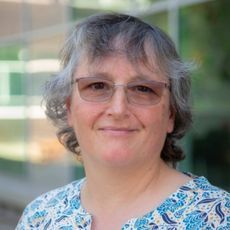
Dr Julia Lodge is a Reader in the School of Biosciences at the University of Birmingham. Julia has contributed greatly to the scheme as an assessor and mentor for applicants, especially PGR students who teach in Biosciences as postgraduate teaching assistants (PGTAs). This is an important step in the recognition and employability prospects of doctoral students at UoB.
What have you been doing in your context to support Beacon fellowship and recognition?
Practical Laboratory classes are fundamental to the way that Biosciences is taught. They allow our students to develop essential practical skills but are also an opportunity for them to develop as scientists as they apply knowledge and discuss their ideas with others. Post Graduate Teaching Assistants are essential to delivering this important plank of our teaching.
When I took on the role of PGTA coordinator for the School of Biosciences I looked for ways to provide continuing professional development for our PGTAs beyond the initial training that they do before taking on the role. The Beacon fellowship programme has proved to be a very effective way of doing this as it gives PGTAs an opportunity for formal recognition for the teaching that they do and encourages them to develop themselves as reflective practitioners from an early stage of their careers.
How did you get people on board?
I support the Beacon scheme by working proactively to encourage PGTAs to apply for Associate Fellow of the HEA. Together with colleagues from the Beacon programme I hold bespoke Beacon Orientation Workshops for PGTAs who are interested in applying. I think that these workshops are particularly effective because I have a good overview of the work that they do and can advise about how to use their specific experience to evidence an application. They also provide a good opportunity for peer support.
I also make a point of celebrating successful applicants making sure that their achievement is recognised in School communications and on our social media.
Why do you do it? What does having fellowship mean for your local teaching culture?
I think that engagement with the Beacon programme is a key driver of the increased professionalism that we have seen amongst our PGTAs. They see that their work is recognised and valued beyond the specific class that they are supporting. The reflective approach that the application requires also develops their understanding of themselves as educators; I think sometimes they don’t understand what a good job they do until they write about it.
What was a ‘warm-glow’ moment for you?
My warm glow moments are when I read the thoughtful and reflective applications from PGTAs who I have watched develop as educators over two or three years of working with us in labs and workshops.
Our latest paper is a critical literature review and reflection on practice in HE on the topic of disability inclusion within healthcare education. Written by Dr Katharine Weetman, an Assistant Professor in Clinical Communication at the Interactive Studies Unit of the Birmingham Medical School, the paper is of relevance to all HE practitioners who are concerned with EDI, and especially specific types of disability.
The paper was developed based on a final assignment for our PGCHE programme.
Lindsey Compton, Associate Professor in Genetics from the School of Biosciences comments on embracing educational research for academics from a STEM background (and beyond!), after an event of our Education Research and Scholarship Network on 30 October 2025.
Over the years as University educators, we come to know our own students the best! What works (or doesn’t work!) well for them in our context? How do they think and respond to the content we deliver as we teach the subjects we know and love? How do different approaches land or don’t land with our students to help them to engage and progress? So, what better setting in which to trust our own intuition as to what education research questions are the best ones to ask right now to improve the student experience in a data-driven way? Education research is for everyone who wants the educational experience of their students to be the best it can possibly be, so believe in your ideas and if it is new to you then do enjoy delving into the exotic world of social science!
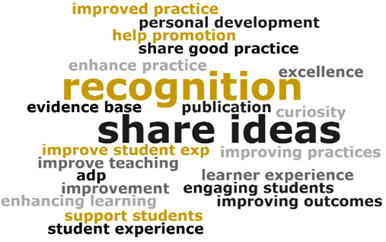
Wordcloud with participants’ responses to “What motivates you to pursue pedagogical research?”
Here are my top five tips for fellow academic scientists from a STEM background who are thinking about taking the plunge into education research:
Be proud of your educational enhancement work and shout about it from the rooftops! In our disciplinary contexts, it can be all too easy to feel like our worth is recognised only through the research income we generate. But perhaps the most valuable contributions we make are not the ones we can easily measure! You will always remember the priceless moment where your students have really valued the difference you made to their special days at university.
Revel in the joy in discovering new research methods! Like a kid in a sweetshop, I discovered methods such as collaborative autoethnography and will now be using it to develop insights into programme leadership. The bread-and-butter methods used in education research can seem exotic and even other-worldly to STEM practitioners!
Get involved in the workshops, seminars and communities of practice organised by the Educational Development team. When the emails are piling up, it can feel difficult to justify the time spent away from your day-to-day work, but you will be glad you did! Most importantly – you deserve to make space for your own professional development. It can be really nourishing for the soul to connect with colleagues in different disciplines, share experience and stories, get inspired and maybe even identify opportunities for future collaboration!
Work on what matters to you! Once you have a project in mind, find like-minded people to work with who care about the same things. And definitely invest in finding collaborators who have experience with the approaches you want to use or the relevant theories.
Stay in your lane! There are different “levels” on which we might engage with educational research. Find the level that is within your scope of experience. If you are aiming to develop or enhance a new theory that will change the way we conceptualise or understand an aspect of learning, that is wonderful! But for many academics, practice-based research will feel much more accessible and will enable you to innovate to improve what you do based on observations from your own context – and who doesn’t want that!
Word cloud with participants’ responses to ““What puts you off from carrying out pedagogical research?””
We are pleased to announce our second seminar of this year, titled: ‘The Unwritten Curriculum: Developing an education career through mistakes, missteps and making connections’.
This seminar provides the opportunity for you to hear Professor Lesley Batty (GEES) talk frankly about her journey at UoB as a teaching-focussed member of staff and learn how she navigated through the highs and lows of this journey to provide innovative research-led teaching in GEES.
We are pleased to announce that our latest article is a very useful investigation into HE practice, especially with regards to data collection and support for students, identifying limitations in policy, and proposing ways for overcoming them. The article, titled ‘Neurodivergence in Higher Education: Data, Practice, and Pathways to Inclusion’, was produced by Dr Qamar Natsheh and Dr Rickson Mesquita, both from the School of Computer Science at the University of Birmingham.
This paper emerged from interdisciplinary discussions exploring how neuroscience could inform inclusive practices for neurodivergent individuals, particularly those with ASD and ADHD. It integrated recent neuroimaging insights from an MSc project with pedagogical research and experience to examine neurodivergence in higher education through data, practice, and inclusive pathways. The paper was initially developed as part of a PGCert final assignment project.
We are pleased to announce that we have two new papers published on our Education in Practice journal page by Dr Shailen Popat titled:
‘Reflections on Short CPD Training and Long-Term Mentoring Communities of Practice for Public Managers’.
The paper explores the comparative benefits of short-term Continuing Professional Development (CPD) training and long-term mentoring Communities of Practice (CoPs) for city managers, drawing on two interlinked initiatives between the University of Birmingham and the Ghana Institute of Management and Public Administration (GIMPA). The first initiative involved a three-day CPD workshop in Accra, designed to co-develop a training framework for local government officers. The second was a transnational CoP hosted in Birmingham, which brought together Ghanaian city managers and academics for a week of collaborative learning and institutional exchange. Through these experiences, the essay examines how CPD offers structured, time-efficient learning while CoPs provide sustained, relational, and context-sensitive development. The essay argues that these approaches are not mutually exclusive but can be integrated into a hybrid model that leverages the strengths of both. CPD can serve as an entry point for skill acquisition and mindset shift, while CoPs can deepen learning, foster innovation, and inform future CPD design. The hybrid model is positioned as a dynamic and cyclical learning ecosystem that supports adaptive leadership and institutional transformation. The essay concludes by advocating for universities to play a central role in convening and sustaining such models, particularly in the context of global public sector reform. This reflection contributes to the discourse on professional education by demonstrating how academic institutions can bridge theory and practice through collaborative, international partnerships.
The paper is of course not just relevant for public management, but contributes to the wider discussion around CPD and communities of practice, which is relevant for educational and staff developers, and colleagues in leadership roles looking to develop staff capabilities within departments, for example.
‘Strengthening Public Management through International Collaboration: The Ghana City Managers Community of Practice’
This case study examines the development of a transnational CoP focused on public management and governance. A pivotal event in this development was the CPD that took place at the University of Birmingham in March 2025, involving Ghanaian public managers and academics. The initiative, supported by the UK’s International Science Partnerships Fund (ISPF), aimed to foster collaborative learning, capacity building, and the co-production of knowledge between Ghanaian and UK institutions. Drawing on the theoretical foundations of CoPs (Wenger, 1998) and collaborative governance (Ansell and Gash, 2007), the visit brought together senior officials from Ghana’s local government sector and academic leaders from the Ghana Institute of Management and Public Administration (GIMPA), alongside UK-based scholars and practitioners. The programme included plenary sessions, institutional visits, and strategic dialogues designed to integrate academic theory with practical governance experience. These engagements facilitated mutual learning and the co-design of training materials tailored to the Ghanaian context. The case study analyses the visit’s objectives, activities, and outcomes, drawing on qualitative evidence to assess its impact on institutional collaboration, policy development, and professional practice. It also considers the implications for future research and international partnerships in public administration. The findings underscore the value of CoPs as mechanisms for transnational knowledge exchange and highlight the role of universities as conveners of global public sector innovation.
Jamie Morris comments on PGTA development and the relationship between research and teaching
A version of this blog post was first published on the University of Birmingham PGR Development blog.
It is often acknowledged that the early stages of postgraduate researchers’ (PGRs) careers are vital in developing the fundamental attitudes and behaviours needed to succeed in the world of academia. This is certainly a view I hold, having worked in higher education for the last 10 years as both an academic and in my current role as an Educational Developer. In the current higher education climate, we are seeing the integration of a larger number of PGRs who teach, also known as Postgraduate Teaching Assistants (PGTAs), to deal with increasing student recruitment and growing class sizes which puts more emphasis on the importance of equipping them with the necessary tools and techniques to be able to teach and support learning effectively.
Increasingly, it is recognised in pedagogical literature that teaching and research, often seen and treated as separate entities or spheres, can function symbiotically and inform one another. There are two clear benefits of research and teaching working in tandem. Firstly, some of the core principles around research can quite easily be applied when we think on and evaluate our teaching practices: learning through inquiry, thinking critically about our practice, experimenting, questioning assumptions about why we do things the way we do and most importantly, adopting an evidence-based approach to support the development of our practices. Secondly, discussing our own research openly in our teaching environments involves students as active producers of knowledge in the process.
It is crucial in this case that we see the development of research and teaching skills as part of the same pathway. This is reflected in descriptor 4.5 Teaching and learning of Vitae’s Researcher Development Framework (RDF) 2025 and in Advance HE’s Professional Standards Framework (PSF), where the core dimensions for effective and inclusive teaching practices include associations between these two interrelated spheres. Both frameworks support core professional values that promote engagement with continuing professional development (CPD) opportunities to develop your practices. The principle of inclusive teaching is also central to both frameworks, with an emphasis placed on recognising effective approaches within your context, and using this knowledge to effectively guide and support all learners.
Research-intensive learning and teaching (RILT) is an established approach which was adopted by the University of Birmingham some time ago and remains a core method in many subject disciplines. Research by Hadjianastasis (2018) indicates the following dimensions of RILT:
Dimension 1: it requires a shift from an often-divisive vision of these two dimensions of our practice as separate and often in competition with each other.
Dimension 2: designing curricula based on past principles (such as research-informed or research-based learning) to allow students to learn through a process of critical enquiry, enabling them to change mindset from that of passive ‘receivers’ of ‘knowledge’ to active pursuers and creators of it.
Dimension 3: the boundaries between staff and students may be blurred, as learning and advancement of knowledge may occur in mutually beneficial fashion.
Dimension 4: staff and students may end up co-creating new knowledge, and reap the recognition and benefits which may result from this, such as publication or research success.
These dimensions are pertinent as they embody established principles around learning, such as the shift away from students as passive recipients of knowledge, to active producers of it. It also places the importance of teaching as a scholarly activity that can influence the way we think about pedagogy and research.
There is an increasing amount of evidence which demonstrates that engaging with both accredited and non-accredited CPD as a PGTA can enhance teaching practices and future career prospects. A study by members of our Educational Development team, Els Van Geyte and Marios Hadjianastasis (2021), highlights the impact of such CPD on PGTA confidence, understanding of HE pedagogy, teaching quality, and career development, with accredited CPD having longer-term impact such as continued engagement with learning and teaching-related CPD and publications in pedagogical journals. The study also positions some of the fundamental skills associated with research, such as reflection, critical thinking and communication, as central aspects of effective teaching, and emphasises an enhancement-based approach to teaching, with critical evaluation and the use of appropriate learning and teaching methods, as a core principle. Principally, the article shifts the notion of teaching from a perceived ‘distraction’ from research to a pathway to deeper academic engagement.
I’d therefore like to finish this post with a call to action: start your teaching development journey as soon as possible! Over the years we have seen countless examples of academics who have flourished and benefited greatly from early-career teaching CPD, both in a teaching and research capacity. I would also encourage supervisors, mentors and any other experienced colleagues to get involved as closely as possible with the teaching development of their PGRs and encourage the adoption of an attitude that places teaching and research in a symbiotic relationship. This is not ignorant of the fact that we operate in a climate where research is often valued over teaching due to its prestige and perceived financial worth. However, by removing the barriers between the two we may begin to facilitate an environment which develops successful, rounded academics for contemporary higher education institutions.
Hadjianastasis, M. (2019) Research-intensive learning and teaching. University of Birmingham. Available at: https://canvas.bham.ac.uk/courses/39296 (Accessed: 24 September 2025).
Van Geyte, E. and Hadjianastasis, M. (2021) ‘Quality and qualifications: the value of centralised teaching courses for postgraduates who teach’, International Journal for Academic Development, 27 (1), pp. 4–16. doi: 10.1080/1360144X.2020.1863810.
This website is the home of the University of Birmingham’s Education in Practice Network. This is our platform for communication, sharing practice and disseminating the good work of practitioners at the University of Birmingham.
On this website you will find details of our upcoming events and network meetings (under Development), as well as the current and past issues of our journal Education in Practice.
Make sure you subscribe to our network to receive updates of meetings, our latest case studies and articles, and other events.











 Education in Practice Network