
We speak to Dr Evelyn Svingen, Assistant Professor in Criminology at the Department of Social Policy, Sociology and Criminology at the University of Birmingham. Evelyn recently publsihed the findings of an education enhancement project in the journal Nature: Humanities and Social Sciences Communications, which represents global recogntion for her scholarship and education research work.
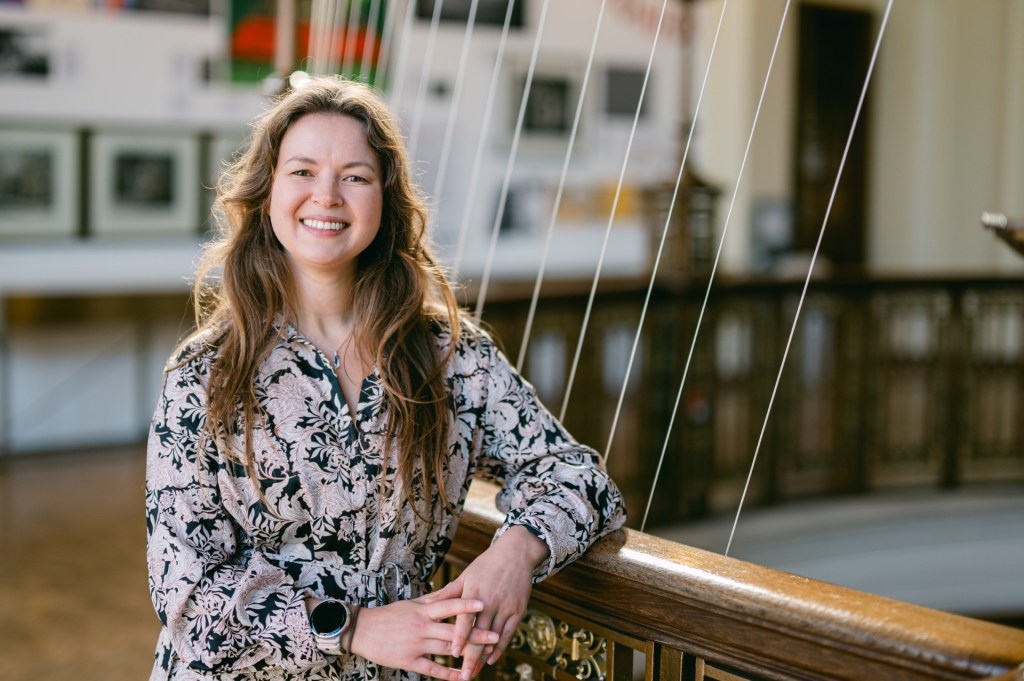
Evelyn, congratulations on the publication of your paper in Nature Humanities and Social Sciences Communications in January! It is fantastic to see that the good work you have done is recognised and disseminated in this way.
Firstly, can you talk to us about the project itself? What was it about?
There were quite a few different facets to the project. In my day-to-day practice, I teach criminological theory which I am very passionate about in my research activity too, and I find it one of the hardest things to teach well. Students are effectively being asked to do a crash course in biology, psychology, sociology, epistemology and then somehow pull all of that together to explain criminal behaviour. But that ability to think interdisciplinarily is central if you’re going to make sense of crime in any meaningful way.
A big part of the project came from me constantly wondering how we can better support students to do that kind of intellectual work, rather than just asking them to memorise theories. Alongside that, there was an important collaborative element with the Science and Fiction Lab at Florida International University (FIU). Together, we created a self-guided activity that deliberately pushed students into what we’d call radical interdisciplinarity by asking them to engage with a module on the physics of an MRI machine with supernatural fiction. The idea was to get students comfortable moving between very different ways of knowing, and to see whether that kind of extreme interdisciplinary engagement would then make it easier for them to tackle the more familiar but still challenging strands of criminology, like psychology, biology, and sociology.
Can you please elaborate on the funding and support you had to help you carry out the project?
While the teaching theory is part of my everyday activity at the university, and the collaboration with FIU was funded by the National Science Foundation, it was very hard for me to assess the impact of my teaching practice on students without additional funding. While I could conduct focus groups myself, I felt like my presence in the room would affect students’ answers to my questions!
Therefore, the funding I received from the University of Birmingham’s Education Enhancement Fund (EEF) was crucial in allowing me to hire research assistants and to incentivise students to participate in focus groups with shopping vouchers.
What would you say is the biggest impact of your project on your students?
I think the biggest impact of introducing students to the self-guided activity was that it gave them permission to sit with complexity rather than panic about it. Criminological theory can feel overwhelming because there’s no single “right” explanation of crime, and students often feel like they’re failing if they can’t immediately reconcile different perspectives. What this project seemed to do was help them become more comfortable moving between ideas, even when those ideas didn’t line up neatly. So the biggest impact wasn’t just content knowledge, but a shift in how they approached learning and uncertainty more generally. Essentially, I wanted to make students get more comfortable being uncomfortable!
What was the impact on you and your colleagues?
For me and my colleagues, one of the biggest impacts was simply getting to hear directly from students about how they experienced the activities. That kind of feedback is invaluable you can design something with certain intentions in mind, but it’s only by listening to students that you really find out what landed, what didn’t, and whether there were affects you hadn’t anticipated. It was really reassuring, and often quite inspiring, to see how they engaged with the material and how it shaped their thinking.
Another important impact was being able to bring two of my GTAs on the module into the project as research assistants. That gave them the chance to move beyond delivery and marking and into thinking more deeply about pedagogy, evaluation, and reflective practice. Watching them develop that awareness of how teaching choices connect to student experience was one of the most rewarding parts of the project, and it’s something that will feed back into their own teaching going forward.
What were some unintended positive outcomes?
The paper for one! Being able to share my research with the world and seeing how valuable the reviewers found it made me a lot more connected to the pedagogical activity around the world and interdisciplinary education! It really reinforced that these teaching experiments matter beyond our own classrooms, and that there’s a genuine appetite for this kind of work. That sense of being part of a wider, international conversation around teaching and learning was an unexpected but really motivating outcome of the project.
How about lessons learned?
I think the biggest lesson for me was realising just how capable students are of dealing with complexity, as long as you give them the right scaffolding and permission to explore. Pushing them into quite radical interdisciplinarity felt like a risk at first, but it made them more confident when they returned to the more familiar parts of criminology.
As a lecturer, I often see a tendency to over-simplify material or to rely on “easier” language to make things feel accessible, and I don’t fully agree with that approach. Some problems really are complex, and I think we need to be honest with students about that rather than offering a false sense of security by implying that one type of explanation is enough. I’ve been teaching this module for four years now, and every time I’ve raised the level of challenge, students have met me exactly where I hoped they would. Seeing that happen and watching them rise to the challenge every year is an amazing feeling.
In the past you engaged with the HE Research and Scholarship Network that is run by the Educational Development team, and published in our institutional journal Education in Practice. How did these interactions help in your progress?
Those interactions were hugely important for me. I’ve written two articles for Education in Practice and presented three times at the Educational Excellence Conference, and all of that gave me a safe and supportive way into a new area of research. It can feel quite daunting to step into pedagogical scholarship for the first time, but that network made it feel welcoming rather than risky.
What really stood out was being surrounded by people who were genuinely passionate about making a difference in their teaching and who were driven by genuine curiosity and care. That was incredibly inspiring. It also reminded me that the biggest impact we can probably have in the world is through our students, and I love being in spaces with colleagues who care deeply about that and about their work.
What advice would you give to someone who is just starting out thinking about HE innovation, scholarship, research and dissemination?
Honestly, it’s the same advice I give my students on the module: go for it, explore, and don’t be afraid to take risks! You don’t need to have everything perfectly worked out before you start, and you shouldn’t wait until something feels completely “safe” to try it.
I’d also say start from your own practice. The most meaningful projects usually come from real questions about what you’re doing in the classroom – what’s working, what isn’t, and what you’re curious about. If you stay close to that, the scholarship tends to grow quite naturally. And, just like with students, having the confidence to sit with uncertainty and experiment a bit is often where the most interesting and impactful work comes from.
How does this practice improve your work with students?
It makes me much more attentive to how students are actually experiencing what I’m teaching, rather than just focusing on what I intend to teach. Engaging in this kind of reflective practice forces you to slow down, listen properly, and think about how different students are making sense of complex material. That, in turn, makes my teaching more responsive and more honest.
And what are some challenges or barriers to scholarship/research into education?
I think one of the biggest challenges is time. Educational scholarship often sits on top of already very full teaching and administrative workloads, and it can be hard to carve out space to reflect, analyse, and write properly. There’s also sometimes a perception that pedagogical research is “less serious” or less valued than disciplinary research, which can make people hesitant to invest in it.
Another barrier is confidence. A lot of people are doing really thoughtful, innovative things in their teaching but don’t see it as research or don’t feel qualified to write about it.
What inspires you most about your work?
What inspires me most is seeing students surprise themselves. Watching someone realise they can handle complexity, make connections they didn’t think they were capable of, or start asking much deeper questions than they thought they could, that’s incredibly motivating. Those moments remind me why this work matters.
I’m also really inspired by working with people who genuinely care about what they do, whether that’s students, colleagues, or collaborators from completely different disciplines. Being around that kind of curiosity and commitment, especially when it’s driven by wanting to make a difference rather than ticking boxes, is what keeps the work exciting for me.
 Education in Practice Network
Leave a comment